
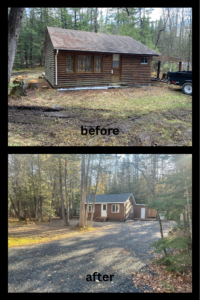
Making the Right Call for an Older Cottage
When an older cottage no longer works for how you live today, the question usually comes down to this: do you try to fix and expand what’s there, or do you start fresh and build new?
At Oak Star, we walk clients through this decision regularly. There’s no universal right answer; it depends on the condition of the home, the budget, and what you want long term. Below is a straightforward breakdown of both options.
Option 1: Demolish the Existing Cottage & Build New
Pros
Full control over the layout
Building new allows you to design the home properly from day one that comes with better flow, better use of space, proper ceiling heights, and layouts that actually match how people live today.
Built to current standards
A new build meets today’s building codes and efficiency requirements. Structure, insulation, mechanical systems, and electrical are all designed to perform from the start.
Fewer surprises
With a new build, most of the unknowns are eliminated. That makes budgeting, scheduling, and construction far more predictable compared to working with an older structure.
Lower maintenance over time
Everything is new. That usually means fewer repairs and lower upkeep costs in the years ahead.
Cons
Higher upfront cost
Demolition and a full rebuild typically require a larger initial investment, depending on design, materials, and site conditions.
Longer overall timeline
Between demolition permits, approvals, and full construction, rebuilding can take longer from start to finish.
Municipal restrictions
Some areas limit demolition or impose additional requirements, which can affect both design and schedule.
Option 2: Renovate & Add On to the Existing Cottage
Pros
Potential cost savings
If the existing structure is solid, renovating and adding on can sometimes be more economical than starting over.
Quicker to get moving
Depending on the scope, renovations or additions may require fewer approvals than a new build, allowing work to begin sooner.
Use of existing structure
Keeping foundations, framing, or services in place can reduce the overall scope of work.
Flexibility in phasing
Some renovations can be completed in stages, which may help manage cash flow.
Cons
Unknown conditions
Older homes often hide issues, outdated wiring, plumbing problems, insulation gaps, or structural concerns — that only show up once work begins.
Design limitations
You’re working around existing walls, spans, and ceiling heights, which can limit what’s realistically achievable.
Efficiency limitations
Even with upgrades, older portions of the home may never perform like a fully new build.
More complex construction
Renovations require careful sequencing and experienced trades. That added complexity can impact timelines and cost certainty.
So, Which Option Makes Sense?
The right choice depends on:
-
The condition of the existing cottage
-
Your budget and risk tolerance
-
Your long-term plans for the property
-
Local zoning and building regulations
At Oak Star, our approach is simple and practical. We assess the property, identify the risks, and help you decide whether renovating makes sense or if rebuilding is the smarter long-term investment.
Talk to Oak Star
If you’re weighing a renovation versus a rebuild, we’re happy to walk through the options with you. From feasibility and budgeting to construction, we’ll help you make a clear, informed decision and deliver a home that works now and long term.
Contact Oak Star to get started.